Artificial intelligence is changing how we think and work. In recent years, new forms of AI have pushed universities to the forefront of institutional change. Higher education professionals now face a dual challenge: shaping the future of their own work while preparing students to shape the future of all professions. This moment presents educators with a unique opportunity to model how all of us can reflectively and responsibly engage with AI in ways that enhance human dignity, creativity, and agency.
To create meaningful work with AI, we need to understand how information practices developed in the past, as well as establish new ethical foundations in the present for imagining desirable futures. The invention of writing led to the invention of the library, and the invention of the printing press led to the invention of the research university. We do not know yet what types of institutions will emerge following the invention of AI, but we do know these will be shaped by our deliberations and decisions today. We created AI and the social systems with which these technologies are entangled; designing our future with AI is our responsibility and work.
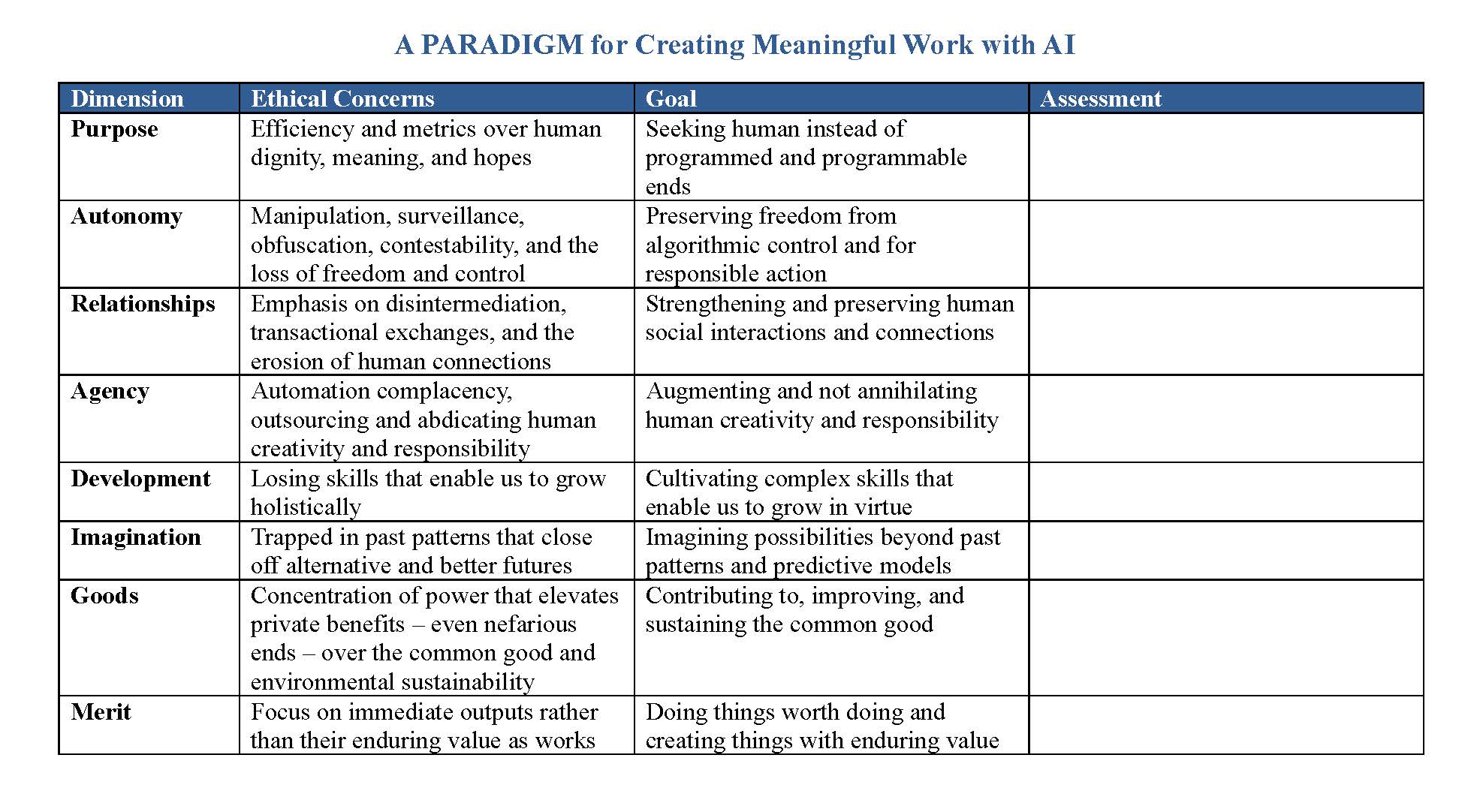
My current book project offers a historically and ethically informed framework for that work. It is called PARADIGM, which is an acronym for the elements of meaningful work: purpose, autonomy, relationships, development, imagination, goods, and merit. The PARADIGM framework can help us reflect on, imagine, and create meaningful work with AI within and beyond the academy.