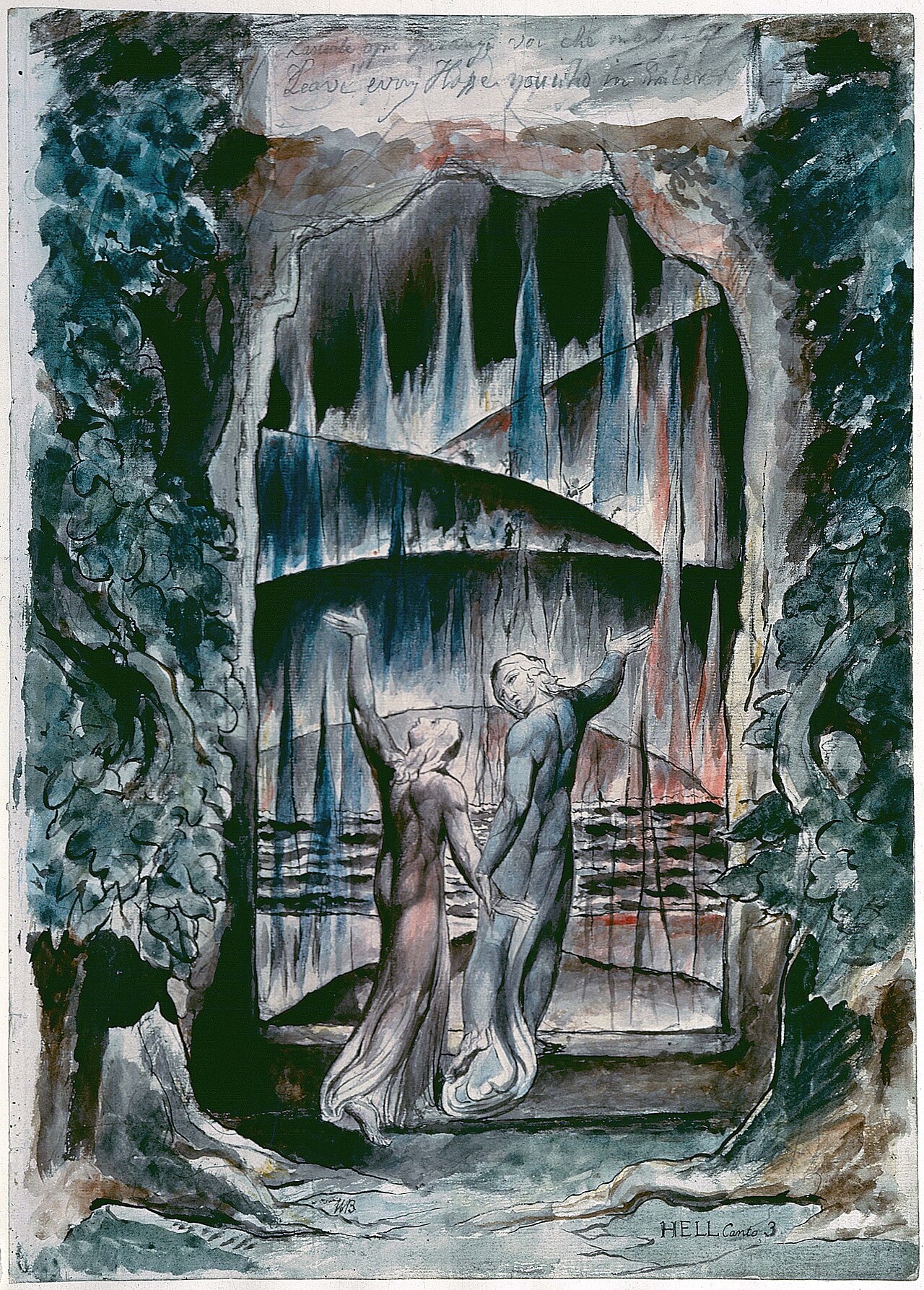
Dante’s Hell is populated by those “who have lost the good of the intellect.” They have passed through the gate over which are inscribed the words, “Abandon all hope, you who enter here” (Inferno, Canto III). Dante’s vision is didactic as well as poetic. Through his art, he seeks to awaken the imaginations of the living to reflect on their anticipations, desires, and commitments. Are they too small, confused, malformed, or harmful to them and others?
Many are fearful or at least anxious about AI. I think what most people are concerned about is losing what is good about human intelligence. This is a valid and pressing concern: The history and future of AI is about automating more and more tasks—good, bad, and ugly—which previously required human intelligence.
In my new book, Hope in the Library, I describe libraries as places of hope. Over their entrances should be inscribed the words, “Attend to all hope, you who enter here.” Throughout their long history, by cultivating human attention and agency, libraries have helped us preserve, enhance, and direct the good of the intellect through significant social and technological changes. They also can help us imagine and create more meaningful work with AI.
I do not believe we can create an AI Paradiso. In the Apocalypse of John, which I discuss in connection with AI in my previous book, the image of that ideal is called New Jerusalem—the absolutely new and true city of peace. But if we pursue greater hopes, loves, and beliefs, as Dante’s Inferno encourages us to do, I believe we can create something closer to Francis Bacon’s utopian New Bensalem, the child of the city of peace.
My hope for Hope in the Library is that it will inspire hope for ourselves, our societies, our species, our world, and the institution that can continue to help improve all of these: the library.
Image: William Blake’s drawing of Dante and Virgil entering the gate of Hell (1827).